Unknown's avatar

About AMWeston

After too many years as an IT developer with various financial organisations I went back to University to study to be a teacher. I graduated in 2008. I am a mother of two - one girl and one boy. I am interested in new technologies especially how they can be used in education. I am Apple Teacher. I am a keen football supporter but gave up my season ticket due to being disheartened and lack of money/time.

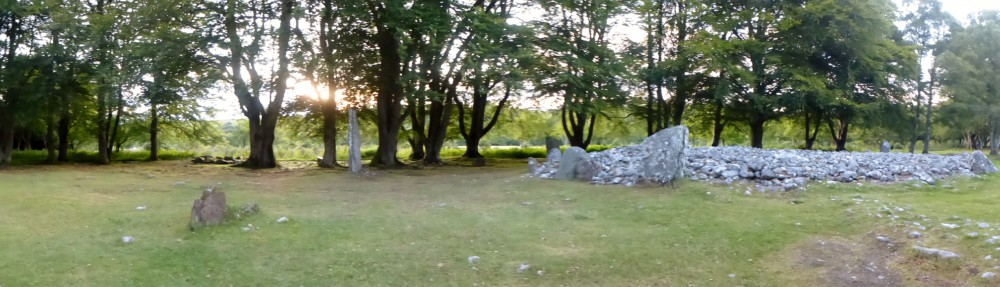
Killiecrankie

I saw this tweet and it reminded me of the last time we visited the Highlands.

Check this out on my other bog – Weston Adventures

In 1689, during the Jacobite Rebellion, the Battle of Killiecrankie was fought on the nothern edge of the village. The Highland charge of the Jacobites took the government forces under General Hugh MacKay by surprise and they were completely overwhelmed in only 10 minutes. Donald MacBean, one of William II supporters, having lost the contest, is said to have cleared the pass from one bank to the other, at “The Soldier’s Leap”.

One of the most famous leaders of the rebellion John Graham of Claverhouse, Viscount Dundee was killed in the battle.  A Memorial Field to the fallen soldiers lies with the grounds of Urrard House.

Source – Killiecrankie

Edinburgh Castle

I realise this hasn’t featured in the series yet but it does get a  mention in Dragonfly in Amber. The castle has parts that date back to the 18th century and before with buildings added in the 1800s. Although it does have royal apartments it has mainly been a barracks and in the late 1700s and 1800s a prison. Although the Jacobites took Edinburgh easily they never managed to take control of Edinburgh Castle. Prince Charlie set up court at the other end of the Royal Mile at Holyrood Palace.

This was my third visit to the castle this year. As a primary teacher I have taken classes to the castle when we have been studying castles. This visit I was looking for the Jacobite connection. It wasn’t easy as the castle was very busy with queues for the Jewels of Scotland exhibition. I think I’ll leave my next visit to the quiet season.

Before entering or when you exit the castle look out for the witches well.

The Plaque Reads…

“This Fountain, designed by John Duncan, R.S.A.
Is near thP1010103e site on which many witches were burned at the stake. The wicked head and serene head signify that some used their exceptional knowledge for evil purposes while others were misunderstood and wished their kind nothing but good. The serpent has the dual significance of evil and wisdom. The Foxglove spray further emphasises the dual purpose of many common objects.”

From – www.royal-mile.com


The Prince Comes to Scotland

Looking forward to heading North next weekend!

dreid1746's avatarCulloden Battlefield

270 years ago on the 23rd July 1745, Prince Charles Edward Stuart set foot on Scottish soil for the first time.

PCES Prince Charles Edward Stuart

From his birth in Rome, Italy on 31st December 1720 Charles had the potential to be a threat to the Hanoverian throne. Indeed, on the night of his birth it is said Hanover was hit by a fierce storm and Gaelic poets proclaimed his birth as the saviour of his people. The early part of Charles’ life was spent with his brother Henry and during his youth he learnt to read fluently, could speak English, French and Italian, was a capable rider and could fire a gun with a good aim.

In 1737 Charles, under the title of Count Albany made a tour of the Italian cities with great reception and the attention this drew was not welcomed by the Hanoverian government. However, it was…

View original post 536 more words

Inverness aka Falkland

Today’s visit was to Falkland which in the series doubled as Inverness. We had lunch at Campbell’s Coffee Shop, outside is featured in the programme. It started to rain so we went around Falkland Palace – worth a visit if your in Falkland especially to see the gardens – check out my blog post about the Falkland Palace.

The sun came out and I was able to take some photos of where they filmed. We saw several marriage stones. A marriage stone is usually a stone lintel carved with the initials of a newly married couple with the date of the marriage. In the tv series these feature as being covered in cocks blood.

A few of the shops and cafes have a pocket Jamie fun to spot!

Seton Collegiate Church

Ok this might not have anything to do with the tv series or the books but it has connections to the time period the books are set in.

Seton Collegiate Church is on the road from Prestonpans to Longniddry. It is not far from where the Scots were at the Battle of Prestonpans.

Collegiate churches are so called because they housed a college, or community, of priests. These were brought together by the local landowner to pray for his and his family’s salvation. During the course of the 15th century, the Setons began the process of raising their parish church to collegiate status. After the death of Lord John Seton in 1434, his widow, Lady Catherine, added a small side-chapel to the south side of the church, to house her late husband’s tomb and a private altar. (The chapel no longer exists.) (Source – Historic Scotland)

It was damaged by zealots during the Wars of the Covenant in the mid 1600s, and the Setons’ support for the Jacobite cause led to it being desecrated again in 1715, this time by the Lothian Militia. At some point during this period the original nave, the only part of the church without a vaulted stone roof, fell into disuse and was demolished. The church later passed to the Earls of Wemyss who restored the surviving parts to become a family burial vault, and they in turn passed it into state care in 1946. (Source – www.undiscoveredscotland.co.uk )

The church is set in charming well kept grounds. As we wandered round I spotted several slate signs which sounds like advice Claire might have used.


Mill at Lallybroch (Preston Mill)

Preston Mill was used for the Mill at Lallybroch. Preston Mill is in the village of East Linton in East Lothian. It is a National Trust for Scotland property which is only open Thursday to Monday during the summer. It offers guided tours around the kiln and mill. Next to the shop there is a small exhibition which includes some photos from when Outlander filmed at this location.

A very picturesque place worth visiting.

Castle Leoch (Doune Castle)

Today’s day trip was to Castle Leoch aka Doune Castle. I had  been here before a few years ago due to the castle’s connection with Monty Python – Monthy Python and the Holy Grail was filmed here in the late 1970s.

Unlike other Historic Scotland properties there are not many information boards so it is worth using the audio tour narrated by Terry Jones.

Doune Castle features in several episodes of Outlander. It was interesting to walk around the castle imagining where scenes were filmed.

I then went for a walk down by the river – no sign of Jamie.

Linlithgow Palace

Another day another location this time Linlithgow Palace. This was used as part of Wentworth Prison in Wentworth and To Ransom a Man’s Soul. The entrance and some corridors were used.

It had been a while since I had been to Linlithgow Palace. The last time was with my children when one of them was studying Mary Queen of Scots at primary school. I had forgotten how beautiful the place is and large. It was fun wandering around trying to work out what and where had been used in the series.

Linlithgow Palace was a royal palace. The last royalty to stay there was Bonnie Prince Charlie on his way to Edinburgh. The palace was destroyed by fire in 1746 after a visit from the Duke of Cumberland!


Tour of the Battle of Prestonpans

Just over a week ago I made a comment on Outlandish UK Facebook page that there wasn’t much to mark the Battle of Prestonpans. Well this sparked another member of the group to prove me wrong and organise a tour of the Battlefield.

On Saturday 11th July a group of Outlander fans – with some husbands in tow – met at Meadowfield Sports Centre, Prestonpans. We were joined by Arran Johnstone, head of the Prestonpans Heritage Trust.

We started by walking up the old wagon way to Tranent Church. Initially the Jacobites occupied the churchyard but later withdrew to Tranent. Then as the battle took place this is where Colonel Gardiner was taken when wounded and he later died in the manse. He is believed to be buried in the churchyard but currently his grave maybe covered with undergrowth.


From the churchyard we walked back down the wagon way and up the man made pyramid hill to the battle viewpoint. Steep climb but worth it for the view and information at the top – this is in the process of being updated. The flag flown is Bonnie Prince Charlie’s standard. This is changed to the union flag for one week of the year between the anniversary of the birth and death of George II.

Next we walked towards the road and joining back up  the wagon way. Here Arran pointed out where the battle took place and described the events of the battle. We could have listened for hours about what happened in September 1745.

We retraced our steps and walked back along the road into a park area where we were surprised to find a memorial to Colonel Gardiner marking roughly where the thorn tree was where he was wounded.

P1000903From here we walked through bushes down a makeshift path into    Thorntree Fields. This is where the fallen from both sides were buried by the locals of Prestonpans in four pits. This area is under threat by developers who wish to build industrial units on this site. The Prestonpans Historical Trust wish to buy or lease the land and create a memorial to all the fallen. More information on this can be found on the Historical Trust facebook page. This is a very peaceful place and it would be a shame to loose this.


The tour continued with us walking to Bankton House and the Colonel Gardiner memorial. Bankton House was Colonel Gardiner’s house and after the battle was used as a field hospital to treat the wounded of both sides. Bankton House was destroyed by fire but where it was rebuild the outside had to kept the same as the original. It is now a private residence. Outside the grounds of the house the memorial to Colonel Gardiner can be found. This was built in the 1800s and could be seen from passing trains.

The tour concluded back in Meadowfield Sports Centre car park. An enjoyable afternoon was had by all. I learned more about the battle and hope to revisit the sites again soon.